
There’s so much to do before the first week of school.
And theres a lot of pressure to make your classroom “Pinterest perfect” before students ever walk through the door.
The cute bulletin boards.
The labels.
The color-coordinated bins.
But every veteran teacher knows that classroom success isn’t about how it looks. It’s about how it functions.
What actually sets the tone for your school year has way more to do with systems, routines, and expectations than how many plants you have in the corner.
So if you’re wondering what actually matters when it comes to setting up your classroom before the first week of school – here’s what I prioritize, and why.
If you’re a newer teacher, or if you feel like your first week of school routine just hasn’t been working for you, then you’ll love this super practical guide.
About Kristen and Moore Than X
I’m a high school math teacher who’s passionate about project-based learning, and making math relevant for students.
You can learn more about me and Moore Than X here.
View this post on Instagram
1. Create a Classroom That Works for Students
Your space doesn’t need to be fancy.
But it does need to be intentional.
When students walk in, can they tell:
-
Where things go?
-
What they’ll be doing?
-
How they should engage with the space?
A clutter-free, purposeful layout makes your room easier to navigate—and easier to manage.
Need help designing a classroom that actually supports learning?
Check out: Classroom Decor Isn’t Just for Looks: 7 Surprising Ways It Impacts Learning
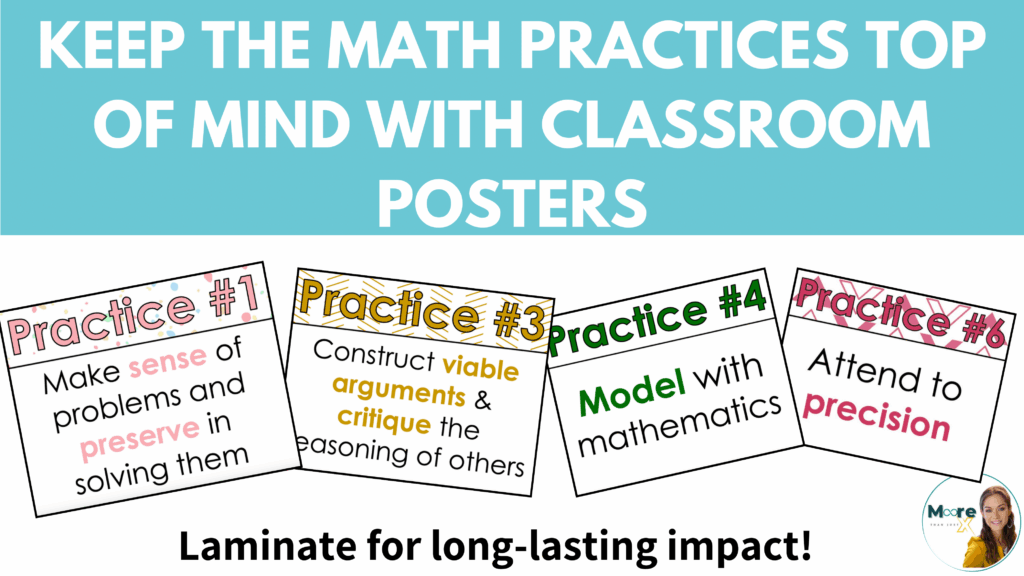
➡️ My Math Classroom Decor Packs are built for middle and high school teachers who want their space to be functional and fresh – without wasting hours printing and cutting.
2. Set Clear Expectations Before the First Disruption
Classroom management doesn’t start with your first behavior issue.
It starts with your first expectation.
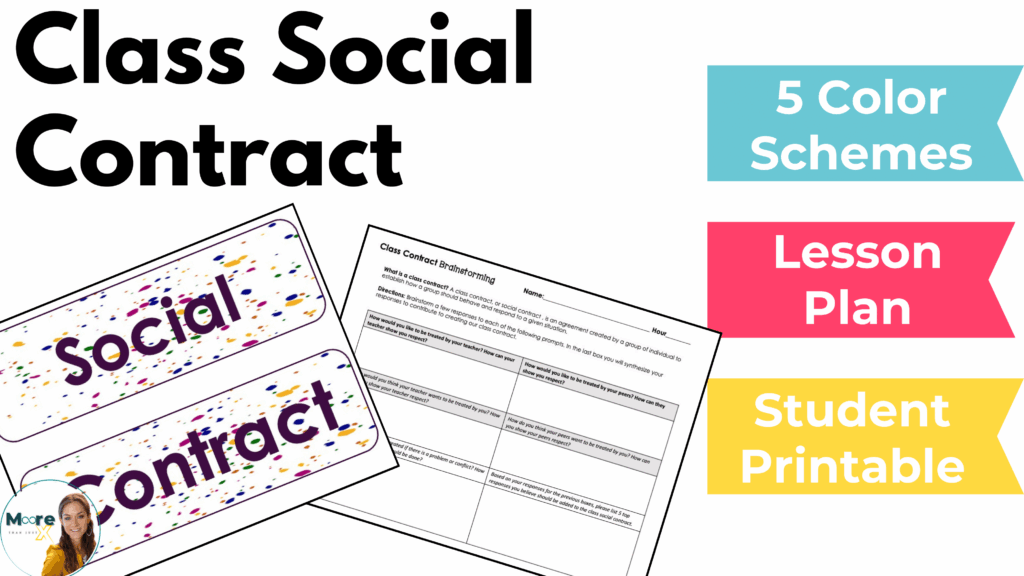
But instead of handing students a list of rules, I start by building a Social Contract with them.
We co-create what respect looks like. What helps us learn. What happens when someone breaks the agreement.
It’s not about being “soft.” It’s about being clear and collaborative from day one.
Want to walk your class through this process?
➡️ Grab my Social Contract + Behavior Bulletin Board Set – it includes the lesson plan, reflection questions, and editable visuals I use to start every year.
3. Visual Routines = Fewer Redirects
Let’s be real: saying the same thing over and over is exhausting.
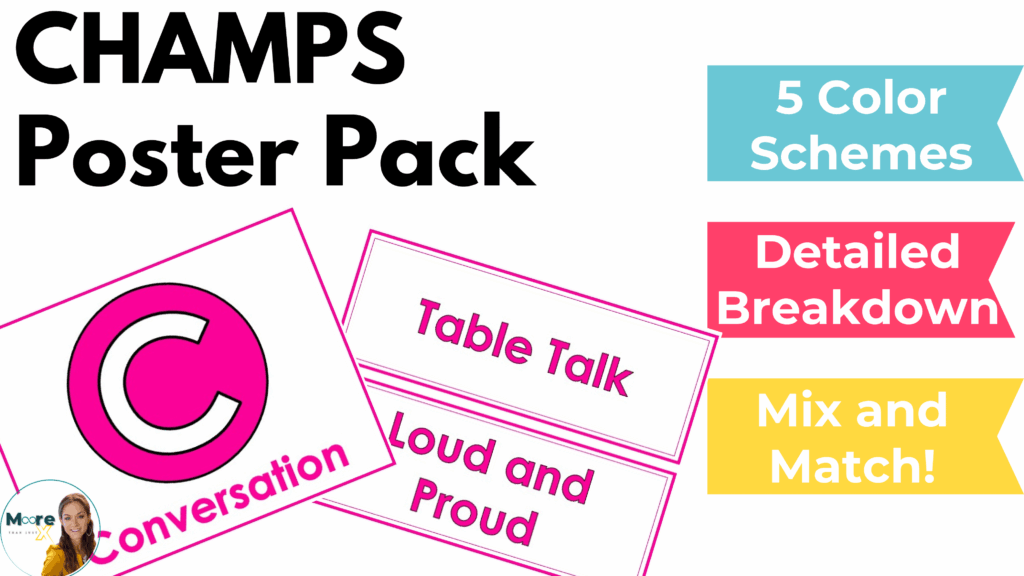
Once I started posting CHAMPS expectations for every activity, I cut down on:
-
Side conversations
-
Repeated questions
-
Misbehavior that came from plain confusion
Now, when students ask, “Can we talk right now?” I just point to the board.
Want to stop repeating yourself too?
Read: Tired of Repeating Yourself? Here’s How I Make Expectations Stick
➡️ My CHAMPS Poster + Bulletin Board Set makes it easy to set clear behavior expectations—for every part of your lesson.
4. Start Class with Structure
You know that awkward five minutes at the start of class where some students are ready, some are still settling in, and a few are just… floating?
Yeah. That used to be me too.
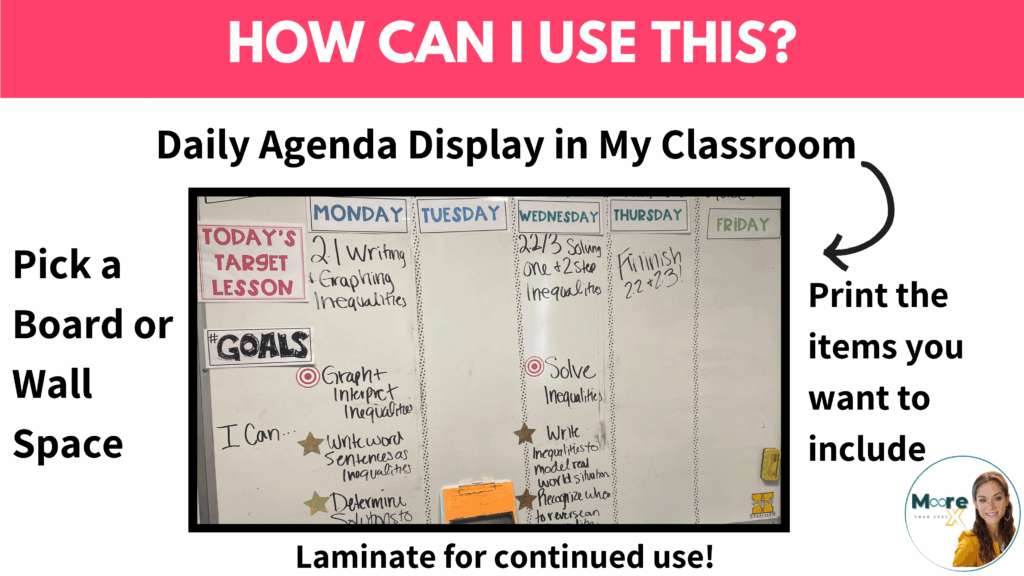
Now, I start every class with a Daily Agenda – posted both on the board and in a slide. Students walk in, look at the board, and know what to do.
It’s predictable. It’s visual. It builds independence.
Want to try it?
Read this: Why I Never Start Class Without a Daily Agenda on the Board
➡️ These Daily Agenda Bulletin Board + Slides give you everything you need to start each day with clarity and calm – plus timers, CHAMPS slides, and “thinking task” prompts to hook students from the jump.
Final Thought: Function Over Fluff
Before the first week of school, your number one job isn’t to make your room “cute.”
It’s to create a space that makes your students feel safe, clear, and ready to learn.
That happens through systems, visuals, and consistent expectations – not perfect labels or color-coded crates.
Set up once. Use it all year.
Your future self will thank you.
If you love practical tips like this, then you’ll definitely love the Modern Math Teacher podcast.
Find and follow the show on your favorite platform!