Have you ever been in the middle of a lesson… explaining something you know is important… and a student raises their hand and says:
“Wait… when are we ever going to use this?”
And maybe you respond with:
“You’ll need it next year.”
“It’s on the test.”
…or “you just will.”
And if you’re being honest?
None of those answers feel very convincing.
Because they’re not.
So instead of brushing past that question, I want to slow down and look at what it’s actually telling us.
Because it might be one of the most important pieces of feedback your students are giving you.
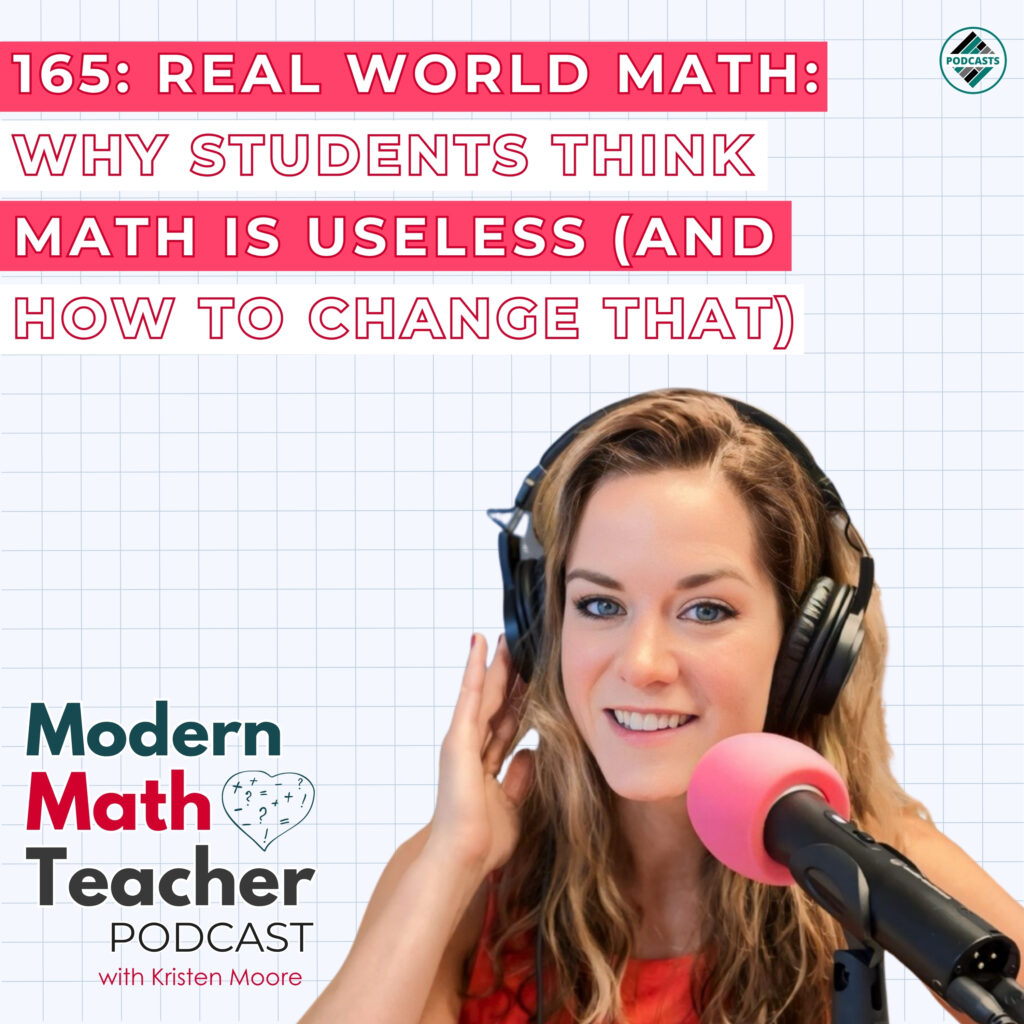
🎧 If this is speaking to you, but listening works better than reading right now, you can hear the full episode here.
What Students Really Mean When They Ask That Question
Let’s reframe this first.
When students ask,
“When am I ever going to use this?”
They’re not being difficult.
They’re asking:
“Does this matter?”
And more specifically…
“Does this matter to me?”
That’s a very different question.
Because students don’t struggle to engage with things they see as useful.
They struggle to engage with things that feel:
- abstract
- disconnected
- irrelevant to their world
So when that question comes up, it’s not a behavior issue.
It’s a relevance issue.
Why Our Go-To Answers Don’t Work
Let’s look at the responses we tend to give:
“You’ll use this next year.”
“It’s important for your future.”
“You need it for the test.”
All of those are technically true.
But they’re not meaningful.
Because students aren’t motivated by:
- distant futures
- vague importance
- external pressure
They’re motivated by:
- connection
- usefulness
- purpose
And if they don’t see that in the moment?
They disengage.
How to Make Math Feel More Relevant
So what do students actually need?
Not a perfect real-world example every single time.
But they do need to see something that connects.
That might look like:
- a real decision they could make
- a scenario they recognize
- a problem that feels believable
- a connection to something they care about
This is where we start moving toward more meaningful math instruction.
Not:
- random word problems
- forced “real-world” scenarios
But math that actually connects to how the world works.
Because when students see that connection… engagement changes.
A Simple Shift You Can Try This Week
Before you think,
“Okay… I need to redesign everything…”
You don’t.
Start small.
Take one lesson this week and ask yourself:
👉 Where does this show up in real life?
👉 What decision could this help someone make?
👉 How could I tweak the context so it feels more real?
That might be:
- changing the numbers
- adjusting the scenario
- adding a question that asks students to interpret or decide something
Small shifts.
But they make a big difference in how students experience the lesson.
Why This Question Matters More Than You Think
“When will I ever use this?” isn’t something to shut down.
It’s something to listen to.
Because it tells you exactly where the disconnect is.
And once you start designing with relevance in mind…
You’ll hear that question less and less.
Not because students stop asking questions… but because they already see the answer.
This Is Just the Start
In the next episode, we’re taking this a step further.
Because not all “real-world math” is actually meaningful.
We’re breaking down the difference between:
- lessons that feel fun
- and lessons that actually matter
Because those are not the same thing.
Ready to Make This Easier?
If this got you thinking, I’ve got something to help you take the next step.
📥 Free Guide: Project or Practice?
Not sure when to use real-world projects vs. skill-based practice?
👉 Grab it here
It’s a simple way to start making your math lessons more meaningful… without overhauling everything.
Because at the end of the day:
Students engage when math feels useful… not just important.
And that shift?
That’s where everything starts to change.