Let me start with a question.
When you hear people talk about lesson plan AI, does it sound helpful…
or does it feel like one more thing you’re supposed to figure out?
Because lately, lesson plan AI has been marketed as the magic solution to everything.
Plan faster.
Differentiate instantly.
Automate the hardest parts of teaching.
And yet, when I talk with teachers about using an AI lesson plan generator, I hear something very different.
“I tried it… and I felt more overwhelmed than before.”
If you’ve had that experience, you’re not alone. And it’s exactly why I wanted to have this conversation on this episode.
Because the real question isn’t whether teachers should use lesson plan AI.
The real question is:
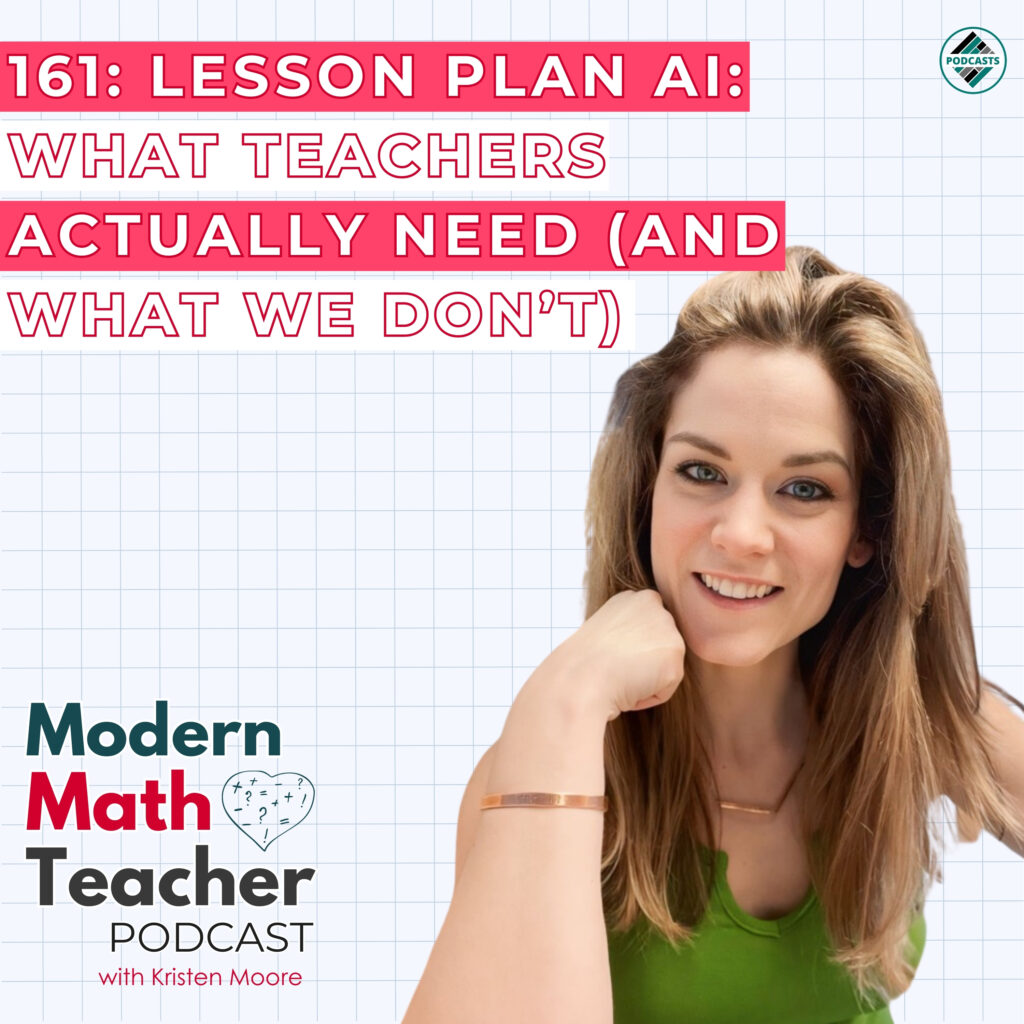
What do teachers actually need from lesson plan AI… and what do we not need at all?
The Real Problem Isn’t Lesson Plan AI, It’s Overload
One thing I’ve learned from working with teachers around teaching with technology is that teachers aren’t short on tools.
We already have:
-
platforms
-
apps
-
programs
-
strategies
-
recommendations
What we’re actually short on is something much harder to replenish:
time, mental energy, and decision-making capacity.
When every new tool promises to do everything… including lesson plan AI tools that claim to write your entire lesson… it doesn’t simplify teaching.
It creates a new kind of cognitive overload.
And that’s the opposite of what educational technology should do.
Good technology reduces noise.
Bad technology adds to it.
Why Many AI Lesson Plan Generators Fall Short
Many teachers try an AI lesson plan generator expecting it to simplify their planning.
Instead, they often get something that feels generic.
Most lesson plan AI tools tend to:
-
generate surface-level lessons
-
ignore the needs of your specific students
-
miss your instructional goals
-
flatten rich tasks into worksheets
The problem is that these tools optimize for speed, not instructional quality.
But planning a great lesson isn’t just about producing a document.
It’s about making dozens of instructional decisions like:
-
What misconceptions might students have?
-
Where should I pause the lesson?
-
What question could move student thinking forward?
-
When should I step in, and when should I let students struggle?
If lesson plan AI doesn’t support those decisions, it isn’t actually helping teachers.
What Teachers Actually Need From Lesson Plan AI
Here’s the shift I think we need to make.
Teachers don’t need lesson plan AI to write lessons for them.
Teachers need AI to support the parts of planning that are mentally draining but pedagogically important.
For example, lesson plan AI becomes incredibly useful when it helps teachers:
-
generate multiple versions of a task for differentiation
-
anticipate misconceptions before class
-
draft reflection questions aligned with the lesson goal
-
create feedback prompts instead of full explanations
Notice the pattern.
AI isn’t replacing teacher judgment.
Lesson plan AI works best when it supports teacher decision-making.
That’s the difference between helpful technology and overwhelming technology.
Teaching With Technology Should Protect Teacher Energy
One thing that rarely gets discussed in conversations about educational technology trends is teacher energy.
Planning strong lessons requires a tremendous amount of cognitive work.
And when teachers are overwhelmed, instruction suffers… not because teachers don’t care, but because decision fatigue is real.
The best educational technology trends support teachers by:
-
reducing planning friction
-
clarifying instructional goals
-
supporting consistent instructional routines
The worst trends do the opposite.
They introduce:
-
constant tool switching
-
“do everything” platforms
-
overly complicated systems
Technology (including lesson plan AI tools) should help teachers feel more focused, not more scattered.
Where Lesson Plan AI Connects to Productive Struggle
If you’ve been following along with the recent podcast episodes on productive struggle, this conversation connects directly.
Productive struggle requires thoughtful planning.
Teachers need to anticipate:
-
where students might get stuck
-
which questions will push thinking forward
-
what feedback will keep students reasoning
Lesson plan AI can support that preparation.
Not by automating the lesson.
But by helping teachers think ahead.
And that kind of preparation protects the thinking that happens once students walk into the classroom.
A Simple Way to Start Using Lesson Plan AI
If lesson plan AI has felt overwhelming so far, here’s a small way to start.
Take one lesson you’re already planning.
Instead of asking an AI lesson plan generator to create the entire lesson, ask it something like:
-
Where might students struggle with this task?
-
What reflection questions could deepen thinking?
-
What feedback prompts could I use instead of telling the answer?
That’s where lesson plan AI can start to feel supportive instead of overwhelming.
Rethinking Lesson Plan AI for Real Classrooms
AI is becoming one of the biggest educational technology trends in education right now.
But that doesn’t mean teachers need more tools.
What teachers really need is better support for the thinking work of planning.
In this episode of The Modern Math Teacher Podcast, I unpack:
-
why many AI lesson plan generators fall short
-
what teachers actually need from lesson plan AI
-
how teaching with technology can protect teacher energy
-
practical ways AI can support instructional decision-making
Because lesson plan AI isn’t about doing less thinking.
It’s about protecting your energy so you can focus on the thinking that actually matters.
 Listen & Connect
 Listen here: https://www.buzzsprout.com/2187419/episodes/18723579
 Instagram: @moorethanjustx
 Join the free FB group: The Modern Math Teacher Community
 Become a Modern Math Teacher Member
 Explore more resources: www.moorethanjustx.com
Want to go deeper?
🎟️ Join me for a hands-on AI training with BER (March or April) where teachers actively create lessons and materials.
👉 This is not a sit-and-get session.
👉 This is a make-and-take experience.
During the training, teachers:
- Use AI to actively plan lessons
- Write prompts aligned to their real units
- Create materials they can use immediately
Leave with work done, not just ideas
🎁 If you can’t make the live training, I still want you to have support.
You can download my Ultimate AI Tools for Math Teachers Guide , where I break down:
- Which AI tools are actually worth your time
- How to use lesson plan AI without overwhelm
- Practical examples for math classrooms