Why do some math classes feel like “we’re in this together”… while others feel like a silent standoff or a competition?
I’ve taught both.
And here’s the thing no one tells you in teacher prep programs:
You can have high-achieving students and still have no classroom community.
And you can have students who struggle academically… but feel safe enough to try.
That difference matters.
Because it’s the difference between students avoiding struggle…
and students leaning into it.
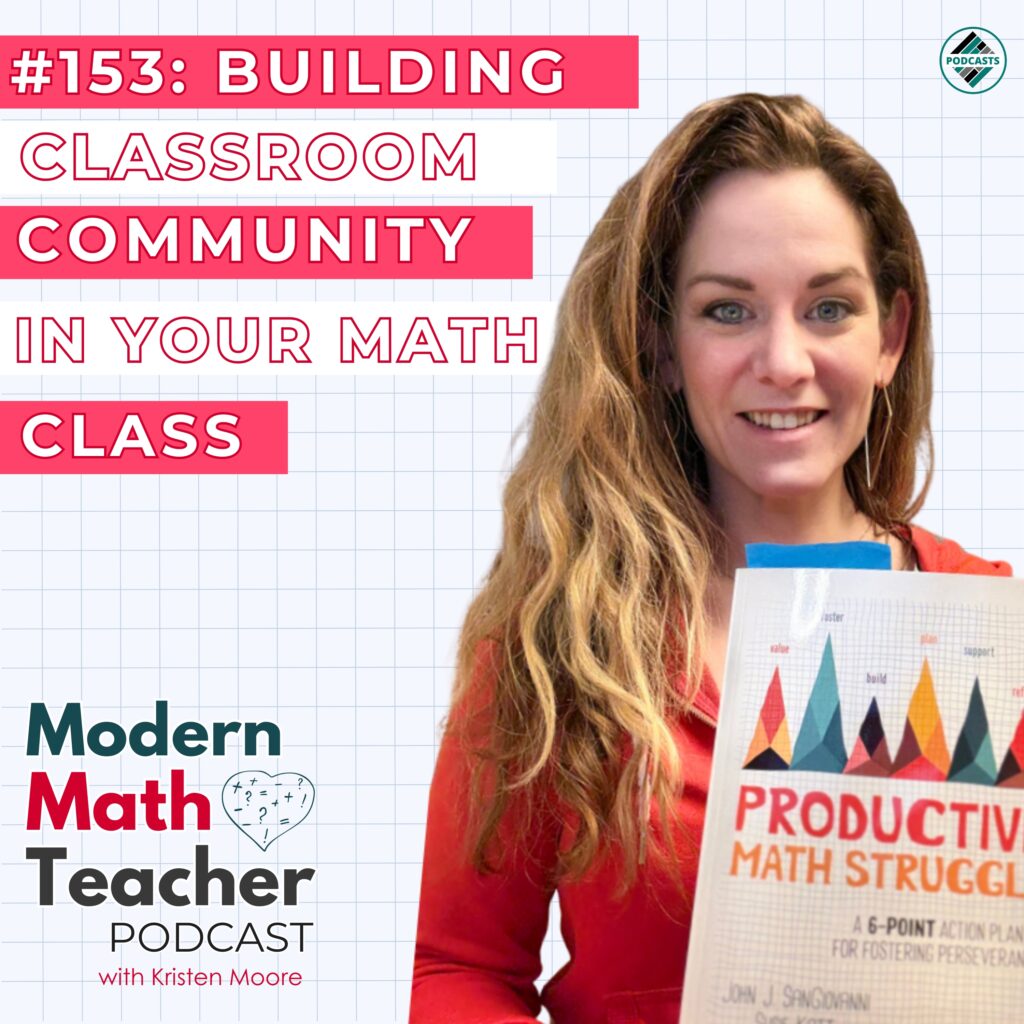
👉 This is exactly what I unpack in this episode of the Modern Math Teacher Podcast, part of our Productive Math Struggle Series. This post will give you the why… the episode gives you the how.
What Classroom Community in Math Really Means
A strong classroom community is not:
-
a quiet room
-
a compliant room
-
or a “nice” room
A productive classroom community in math is a space where:
-
students feel safe sharing ideas
-
mistakes are expected
-
thinking matters more than speed
-
struggle is normal, not embarrassing
At its core, classroom community is built on trust.
Trust that your voice matters.
Trust that you belong in this math space.
That kind of trust doesn’t appear in the first week of school, it’s built intentionally over time.
🎧 I talk more about what actually builds trust (and what quietly breaks it) in the podcast episode.
Why Classroom Community Is Essential for Productive Struggle
Math requires vulnerability.
And for middle and high school students, vulnerability feels risky.
Students will only:
-
share ideas
-
think out loud
-
attempt hard problems
-
make mistakes publicly
… when they feel safe inside the classroom community.
That’s why community isn’t optional in math, it’s foundational.
When classroom community is strong, struggle feels:
-
shared
-
normal
-
respected
When it’s weak, struggle feels:
-
embarrassing
-
threatening
-
avoidable
This connection between classroom community and productive struggle is the focus of this episode, including the research that supports it.
Why Classroom Norms Alone Don’t Create Community
Let’s be honest.
We all teach norms during the first week of school.
We all do the activities.
But norms don’t fail because they’re bad… they fail because they’re not maintained.
Community breaks down when:
-
norms aren’t revisited
-
students don’t co-own expectations
-
we don’t check in after tough days
Community isn’t a one-time setup.
It’s a pattern of choices.
In the episode, I share simple ways to “reset” community without derailing your pacing or adding more prep.
One Simple Shift That Strengthens Classroom Community
One of the most powerful moves you can make?
Let students help define what a good math community looks like — and what hurts it.
When students co-create norms:
-
accountability increases
-
buy-in improves
-
group work actually works
My favorite entry point for this is a Good Group / Bad Group sort… and it’s the Mini Move of the Week in the episode.
✏️ Mini Move of the Week
👉 Have students co-create a “Good Group / Bad Group” sort and build class norms from their ideas.
Shared ownership = shared responsibility.
📚Read along with Us
🔗 Listen & Connect
🎧 Listen here: https://modernmathteacher.buzzsprout.com/share
📸 Instagram: @moorethanjustx
🧑💻Join the free FB group: The Modern Math Teacher Community
👩🏻🏫Become a Modern Math Teacher Member
💛 Explore more resources: www.moorethanjustx.com