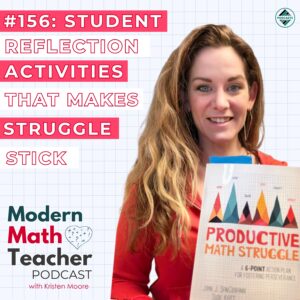
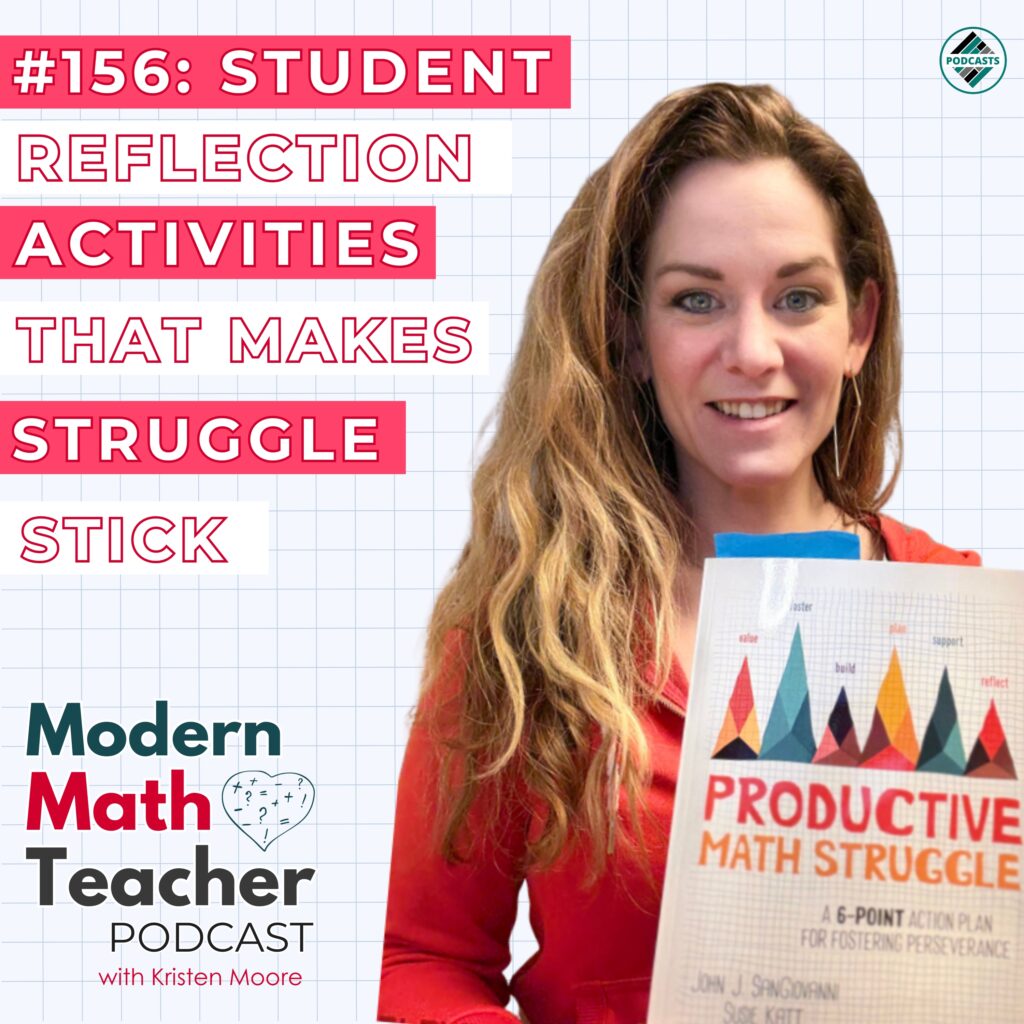
Reflection Activities for Math Class That Make Struggle Stick
We made it — Action 6, and honestly? This might be my favorite chapter in the entire book. It’s short. It’s powerful. And it reminds us of something we don’t talk about enough in math class:
👉 Learning doesn’t end when the task ends. Reflection is what turns struggle into learning that lasts.
In this episode, we’re talking about how to intentionally close lessons in a way that helps students:
-
make meaning
-
recognize their growth
-
name the strategies they used
-
build a habit of productive struggle they can carry forward
One of the easiest ways to do this? Reflection activities that are simple, flexible, and student-centered. Let’s dig in.
Why Reflection Matters
Phillips said it back in 1987, “students need time to know what they learned, why they learned it, and how it can be useful.” Sousa (2008) takes it even further, “learning sticks when students make meaning of both the content and the experience.“
Reflection signals to students that math is:
-
more than getting the right answer
-
more than following a process
-
more than finishing a worksheet
Reflection says:
✨ the struggle mattered
✨ the thinking mattered
✨ you mattered
When students reflect on how they worked through challenge, they begin to see struggle as a skill, not a flaw. That’s how habits of productive struggle are built.
Reflection Doesn’t Have to Be Complicated
Let’s name this out loud: most of us were never trained to plan for reflection. Lesson closure wasn’t emphasized in teacher prep, and reflection often gets skipped when time is tight.
But reflection doesn’t need to be long or fancy. The quality of ideas matters more than the quality of writing. Reflection needs a place to live (like a math journal), and variety matters. Different types of reflection serve different purposes, and that’s exactly what makes reflection activities so powerful.
High-Impact Student Reflection Ideas
Here are a few reflection strategies I love and dive into during this episode:
1. Journaling (Targeted Prompts)
2. “Who I Learned From”
3. Picture of Struggle (Revisited)
4. One Word
5. “Find Someone Who…”
6. Display the Data
Evaluative Reflections
Some reflections help students evaluate their experience:
-
Got It / Tried It Quadrant – Students reflect on understanding and effort. Add dated dots over time to watch growth.
-
Goldilocks Reflection – Was the task too easy, too hard, or just right? Students explain why and what they might need next time.
How Often Should We Reflect?
Not every day, that’s too much. Instead:
-
once a week
-
or every other week
-
routinely across the year
Reflection should be expected, sharing should be optional. Honesty matters, and students won’t be honest if reflection feels judged.
Teacher Reflection Matters, Too
Teacher reflection is just as important. I love these ideas:
-
jot in-the-moment notes on a clipboard or sticky notes
-
journal when your students journal
-
reflect right after the lesson
Ask yourself:
-
What strategies surprised me?
-
Where did struggle turn productive… or unproductive?
-
What would I do differently next time?
-
How did this compare to what I anticipated?
This is GOLD for improving instruction, collaborative planning, and yes… National Board certification 👀
Reflection Leads to Celebration (With Care)
Reflection naturally leads to celebration. But public recognition can sometimes backfire. Labels like “try-hard” or “teacher’s pet” are real. That’s why knowing your students matters.
Celebration doesn’t have to be public, it could look like:
-
private notes
-
quiet shout-outs
-
parent phone calls
-
emails home
-
conferences
Recognition still matters, it just needs to be thoughtful.
 Mini Move of the Week
🎯 Add ONE reflection prompt to lesson closure… focused on struggle, not answers. Just one. Because reflection is how students:
-
make meaning
-
recognize growth
-
build confidence
-
develop lifelong perseverance
Reflection is the piece that makes struggle stick. These reflection activities turn fleeting challenge into lasting learning, and help students see struggle as a skill, not a flaw.
Until next time, keep it real. 💛📐✨
 Read along with Us
 Listen & Connect
 Listen here
 Instagram: @moorethanjustx
 Join the free FB group: The Modern Math Teacher Community
 Become a Modern Math Teacher Member
 Explore more resources: www.moorethanjustx.com