Let’s be real: productive struggle doesn’t just happen.
It’s not “throw a hard problem at students and hope for the best.”
It’s not “mix in a few word problems and call it rigor.”
Productive struggle is a design choice. And that design starts with lesson planning… before students ever walk into your classroom.
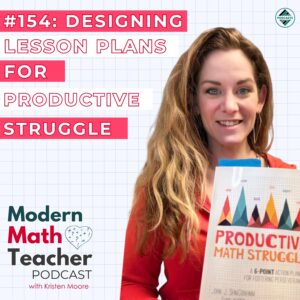
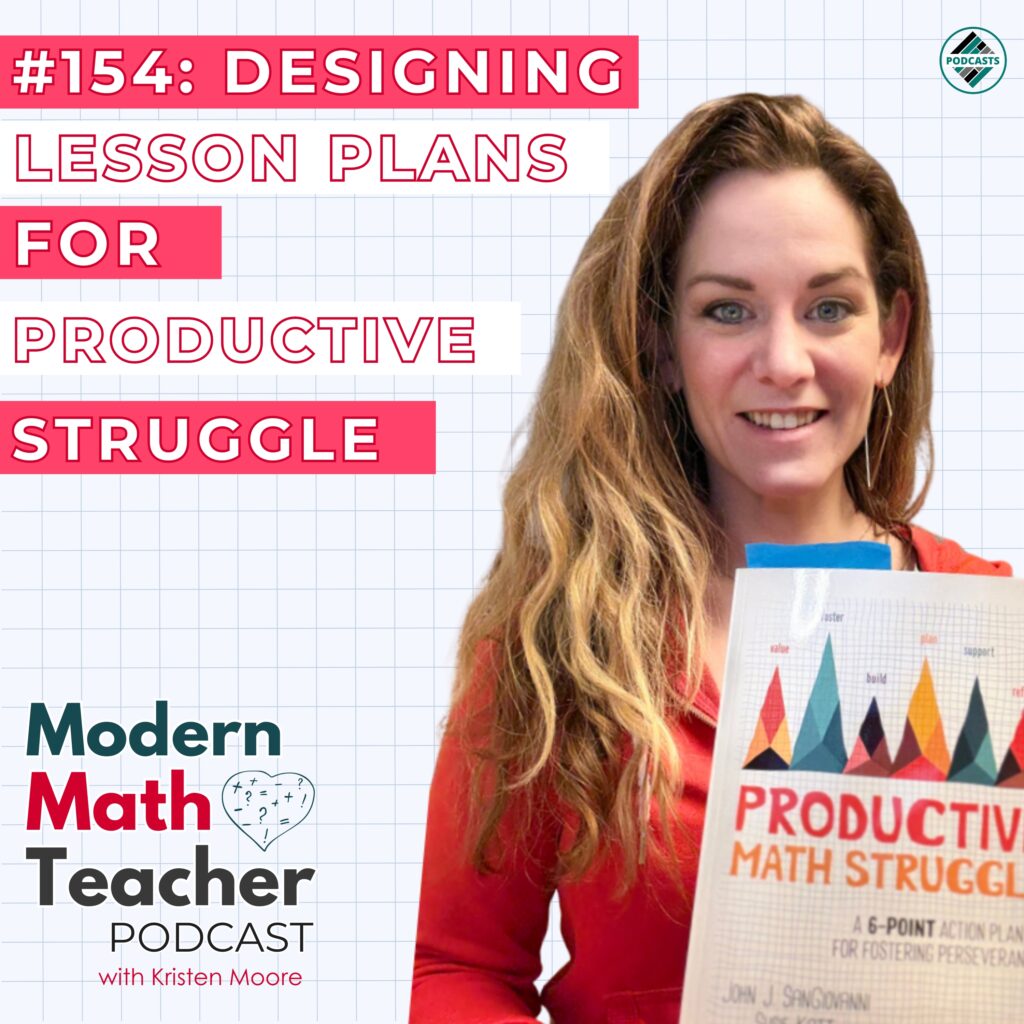
In this episode of the Modern Math Teacher Podcast, we’re unpacking how to plan math lessons that actually make students think. This episode is all about choosing tasks, anticipating student moves, planning teacher responses, and creating routines that give struggle space to thrive.
What It Really Means to Plan for Struggle
Good lesson planning isn’t about planning a lecture or a procedure.
It’s about planning for student thinking:
-
The moves students might make
-
The questions they might ask
-
Misconceptions they could have
-
How you’ll respond to guide reasoning
It’s a shift from covering content → facilitating sense-making, and from hoping students think → intentionally designing moments where they must think.
🎧 I share examples, mindset shifts, and step-by-step strategies in this episode.
Choosing Tasks That Actually Spark Thinking
Here’s the truth: in productive struggle, task quality is everything.
High-quality tasks reveal misconceptions, invite multiple strategies, spark discussion, and connect concepts. Low-quality tasks? They can kill productive struggle before it even begins.
When you’re lesson planning, think about tasks that balance three dimensions of rigor:
-
Conceptual understanding – Students must grapple with the “why,” not just the “how.”
-
Procedural fluency – Built from understanding, not rote practice.
-
Application – Real-world connections that let students reason, represent, and debate.
In the episode, I show how to select or modify tasks to hit all three, and why this is the foundation of truly rigorous lesson planning.
Small Shifts That Make a Big Difference
Even one small change in a task can transform how students think. Some strategies we unpack in the episode:
-
Reverse the question: give the answer → students create the problem
-
Connect representations: diagrams, graphs, tables, equations, words
-
Compare & contrast strategies to spark discussion
-
Open questions and pattern identification
And here’s the kicker: do the task yourself first. Anticipate student moves, language needs, and potential misconceptions. This step alone will save you headaches and maximize thinking in class.
Lesson Planning That Supports Safe Struggle
Good lesson planning also accounts for:
-
Groups: triads over pairs, time to gel, intentional formation
-
Routines: warm-ups, think-pair-share, structured work cycles
-
Classroom community: the trust and safety that makes struggle possible
When these elements are planned ahead, students can take risks, reason out loud, and persevere… all without feeling “rescued” or micromanaged.
✏️ Mini Move of the Week
👉 Choose any math task and modify it using ONE strategy from today’s episode.
Tiny task shifts → big thinking gains.
Even a small shift, like reversing a question, adding a representation, or asking an open-ended prompt, can spark richer thinking tomorrow.
📚Read along with Us
🔗 Listen & Connect
🎧 Listen here: https://www.buzzsprout.com/2187419/episodes/18427402
📸 Instagram: @moorethanjustx
🧑💻Join the free FB group: The Modern Math Teacher Community
👩🏻🏫Become a Modern Math Teacher Member
💛 Explore more resources: www.moorethanjustx.com